Saturday, September 18, 2021

Potato - Potahto

Wedding Party - 40 years ago
September is one of my favorite months for many reasons. One of  which is the recognition of my marriage.  (YouTube Channel link)  This month is also gaining popularity with other couples as  indicated by a wedding I am conducting.

In years past most "legitimate" wedding ceremonies occurred within the confines of a church building. The idea was God's blessing on a couple would only occur within the walls of a church building. Also, an ordained clergy person, appropriate music, and dignified conduct were indicative of the sacred and in some traditions sacramental ceremony. Plus, the venue was free or relatively inexpensive while being familiar to most people.

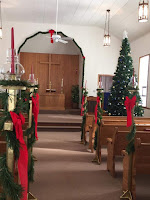
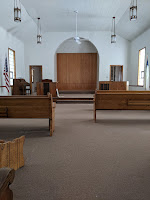
Hillsboro United Parish
I do not remember a particular time when the wedding ceremony, venue, and structure began to change. However, the change, in my estimation has been significant. Rarely are wedding ceremonies conducted in church settings. Numerous venues abound in urban and rural settings. Now most church buildings charge a fee for members and non-members alike. There is often a list of "dos + don'ts" that is significantly greater within a church than in the rented venue. Officiants (no longer limited to clergy) can instantly receive online, legal credentials to satisfy the laws of individual states to sign a marriage license. The comfort level provided to those attending in a venue setting is greater and often more familiar than in a religious structure. Music is unrestricted. It is as diverse as the DJ's ability to download from a streaming service. 

Setting for recent ceremony.
The ceremony in which I was most recently involved included the couples' canine as the "flower + ring bearer." The outdoor venue in a quiet, rural, farm setting fit the nature of the couple. The relative simplicity along with the venues cats, chickens, fruit trees, and fall garden produce provide a unique and relaxed setting. Plus, the fee included multiple days for set up and take down without feeling rushed to get out of the way for the next event. 

Which setting is more appropriate for a wedding ceremony? Is God's consecration of a union greater in a structure set aside for religious functions or a repurposed barn and farm? Is there a correlation between setting and sanctity which directly impacts the longevity of the relationship? Is there a benefit to an officially recognized religious professional conducting the ceremony? 

Reception/meal area
My perspective is found in today's title. The ceremony and setting are not the basis of a relationship. Who is chosen to speak words, manage the flow of the event, and sign a civil, legal, government document has minimal impact on a relationship which began months or years previous. Money spent to facilitate and entertain a gathering of family and friends does not provide dividends which keep a relationship strong yet flexible. It is the willingness of a couple to understand the changing dynamics of a relationship over time which is important. The family and friends are to be mentors. They provide applicable interpersonal resources to assist the couple in daily decision making. And surrounding all of these dimensions is the grace-filled, forgiveness focused presence of God.  The gifts or blessings of the Divine are not limited to place or person. God's ability to positively impact the pleasure and perseverance of the relationship cannot be relegated or regulated. 

Life and relationships are continuously commingled. I discover perplexity and promise both by being in relationship and publicly celebrating the journey of others in their relationships! This cannot be contained by place, custom, or language. 

Valley of Fire State Park  (northeast of Las Vegas NV)


Saturday, September 4, 2021

Now Hiring

Labor Day weekend is an appropriate time to think back on jobs I have endured and embraced over the decades. I invite your comments about great work experiences or those from which you walked away, as well.

My shortest official job was 5 hours. It was a summer job during college years. The pay and hours seemed attractive. So by sunrise a friend and I were transported to the job site. We began scraping stones off of a previously sealed flat roof. It was being resurfaced and the stones reused. We used long handled scraping tools and a great deal of muscle to get the job accomplished. It was slow, tedious work. The brown cotton jersey gloves offered minimal protection, but that was what we were told to bring. The morning humidity rose with the sun. Sweat, which in my life has always been abundant was streaming off my forehead and down my back. My hands were hurting and my clothing was drenched. As my friend and I ate our scant lunches in the air conditioned comfort of the school on which we were working, the decision was made to walk back to the roofing company's parking lot. 

A person stopped along the road to ask if we needed a ride. Being blistered, hot, hungry, smelling of sweat, and defeated it did not matter to either of us that the driver was stoned. I never received a paycheck for the hours worked. And I did not care!

Bailing hay and straw for a neighbor, shoveling livestock manure, night shift sanitation at a meat processing plant, adjunct educator on middle, high school, and community college levels, summer park staff, addiction treatment center chaplain, barista, grocery store orientation trainer, emergency medical technician, hospice + healthcare chaplain, educator/facilitator for a multi-county domestic abuse treatment program, race director for an endurance event organization, farm crisis responder/advocate, and window washer are jobs that have dotted the decades providing tax documents. 

If you have read posts from the past months, you realize my primary occupation for decades has been pastoral care. As of now I have served 16 congregations in various capacities. It is a vocation of flexibility, diversity, and relationships. In many ways it has been hard to specifically define. I have the luxury to adapt it to fit my situation. At times flexibility is a curse. Overall, the vocation has served me well. It has been more than a job. It has allowed for creativity. It has stimulated my wanderlust. It has allowed me to never settle into a mind/spirit numbing routine. 

As I hear the recent rancor about lazy people getting too much money from unemployment, I cringe. A person I know posted their disgust on social media about not getting a chalupa at 7pm due to a worker shortage at Taco Bell. The post stated how awful it is that people do not see the value of a job. Teenagers should quit living off of their parents, as well. It seems as if work is now a transactional enterprise. Other people should work so I can benefit and do so at minimum pay. If my day is inconvenienced it is due to the laziness of others. I have every right to expect great customer service even as I view the worker as inferior to me. When did work lose its respect and dignity? I have done things for a paycheck. Such jobs serve a purpose, but they do not lead to long-term fulfillment. What is wrong with taking time to investigate what fills our being and not just our wallets? I view labor and vocation as relational more than transactional. We all have diverse interests, skills which ebb and flow, and dreams waiting to be explored. Labor is a part of life, but is does not define life. Work IS NOT life!

I often refer to this Hebrew wisdom from the book of Ecclesiastes, "So I commend the enjoyment of life, because there is nothing better for a person under the sun than to eat and drink and be glad. Then joy will accompany them in their toil all the days of the life God has given them under the sun."  (8,15  NIV)

Again, I welcome your comments about your work experiences. If you want to view my bi-weekly YouTube videos click on the link.  Thank you for reading!


Saturday, August 21, 2021

Accumulation

Congregational Lutheran 
United Church at 
Christmas.
The Lionel Train Set was an unexpected Christmas gift. Even sharing it with both older brothers did not diminish the fun it provided. A few years later I received a microscope set complete with a frog to dissect. It was mine. I could control if anyone else got to use it. From that time on gifts were individualized with no need or expectation to share. 

Our consumer driven society has emphasized accumulation over sharing. Pantries are filled with a wide variety of foods. Sharing happens a couple times a year during an organized food drive. Three or four stall garages have more square footage than the homes to which they are attached. Storage of stuff is a necessity. The seasonal equipment, sporting goods, motorized vehicles, and decorations need to go in an accessible place. Multiple items which I have accumulated are behind every closet door and under every plastic storage bin lid. Outdoor gear (gloves, head wear, snowshoes, etc) command a lot of space. I realize I only use one item at a time. Yet I want to be certain to  have the proper gear for changing conditions. As the saying goes, "You never know when you may need it."

Heirlooms of tableware

Marie Kondo, the decluttering expert says if something does not spark joy, dispose of it. She obviously does not agree with or maybe has never heard the aforementioned phrase. Living by Ms. Kondo's concepts would make for smaller garages and smaller houses. Fewer storage units would dot the landscape. This all may cause a scarcity of thrift stores. 

Congregational Lutheran United Church has been declining for decades. Members are aging. Others have moved. Those who have recently moved into Gardner, ND  are not interested in the congregational community. The church does not spark joy in their daily lives. Even, "You never know when you may need it," has not generated enough discomfort or guilt to create change. Guilt has often been used to promote the "what ifs" in life as a type of religious insurance policy. Maybe it is more about    whole life than a specific event policy?  Hopefully the building will sell and be repurposed as a residence or demolished so a new home can be constructed.  The latest message on the outdoor sign, "This was our house. It can now be your's." 

Moving day.

If it cannot be used often, if it does not spark joy, if its enjoyment value is not readily available it will no longer be used. This is why ride sharing services are available. Why own a vehicle and rarely use it? All it does parked is depreciate. Money can be made delivering people, packages, or both. The shared Lionel train provided multiple people enjoyment. The tableware filling shelves in the condo, which has meaning for my spouse, has no meaning for our children.  The pews, pictures, decorations, books, and kitchen wares of the congregation have little value. No one thought about how to dispose of brass altar ware when the items were purchased  and given in memory of someone. 

Value is not in the accumulation. Value is discovered and appreciated in the usage. The significant life events, the gatherings of families, the noise of church basements filled with children were enhanced by those purchased and memorialized items. People wanted to provide these meaningful experiences for future generations. However, they had no way to foresee the changes. Changes in place and perspective have relegated tableware, pew cushions, combined TV, VHS and CD players, etc. to thrift stores and household waste disposal sites. This stuff is not indicative of the people who gave of their resources to purchase the items. The people sparked joy and continue to spark joy in the sharing of life. It is the accumulation of memories and the stories of relationships with others that will never be discarded!

Communion Set from
the late 1800's
This Communion set has not been used in the 10+ years that I have been involved with Congregational Lutheran United Church. The letter which came with this gift over 100 years ago is framed and legible. Plans are to "regift" it back to the generous congregation which provided it. 

Now everything is disposable. No one wants to wash small, glass Communion cups. During a long period in the ongoing pandemic self-contained, all-in-one Communion cups were used.  It is not the vessels. It is the people who gather and share!


Saturday, August 7, 2021

What Is Church?

They dotted the landscape. Whether brick, stone, or wood the buildings called "church" were numerous. Most were used for generations prior to my arrival on the planet. So often all I noticed were old people. It seemed everyone was at least my parents' age or older. The only time I felt part of the group was with peers in Sunday School or the 2 week summer Vacation Bible School. High School Youth Group (Luther League) was not significant as I made other arrangements to connect with friends.

Both in New Testament Greek and general New Testament Studies at seminary the word,"ecclesia" was central.  It was foundational for my career as a pastor. Ecclesia or church, the place where people gather for worship and education was a significant part of community. I was being trained as a leader in that long established tradition. My role would involve preaching, teaching, worship, and visiting. It checked the boxed of my laid aside desires to be a physician or a teacher, as well as developing new skills.  (See July 11th post for background)

Most of my 40 year career has involved small town or rural congregations. A couple of stopping points: a large, growing suburban church and chaplaincy in a healthcare institution, broke with the general flow. While being a chaplain I served in a couple of small settings. I could not shake the parish pastor role. Chaplaincy provided interactions with a broad spectrum of age groups, religious and non-religious affiliations, the community of coworkers, as well as transitory individuals and families receiving medical care. This, too, was pastoral care but not in a "church" as I had so diligently etched into my psyche. This setting was varied, challenging, and stimulating. However, my own issues with authority and bureaucracy brought about my resignation. 

An endurance athlete, coach, mother, step-mother, and more named Kate Coward refers to her training groups (biking, running, etc) as "church." In interactions with Kate, I asked about her choice of this specific word. This is an edited portion of her response, "In its basic sense it is a group of people, assembly, or gathering. In my case it is a group of people of different ages, genders, and situations in life, who enjoy being together and meet regularly. We listen. We offer advice. We teach. We share our worries, joys, hard times and celebratory times with each other. Our gatherings make us healthier and happier humans, and therefore better serve our friends, families, neighbors, and communities around us."

Kate placed into a few sentences what I have been pondering in my spirit for more than a decade. Recent Gallop statistics on adult membership to a church, synagogue, or mosque: 1999-70%, 2018-50%, 2020-47%. Americans who do not identify with any religion: 1998 to 2000-8%, 2008 to 2010- 13%, 2017 to 2020-21%. The religious church is in a steady decline. The buildings which dotted the rural landscape of my childhood and those which I have had the pleasure to serve are dwindling. Aging population, relocation, mobility, and other groups or organizations have replaced these once stalwart gathering places. The disruptions to communal life and understanding whether it be political, economic, social, or doctrinal are causing the traditional religious church to be less of a support structure and more of a divisive wedge. The push to have 
the correct world view, political affiliation, social awareness, evangelical zeal, nationalism, patriotism, etc. have caused people who are looking for acceptance, hope, support, and spiritual growth to get those needs met elsewhere. The need for an assembly of people of various ages, genders, and situations who listen, support, teach, advise, and share life in all facets remains vitally important. However, the past model of religious church as a homogeneous group or the current model of religious church as a business activity center vying for relevance and membership to secure operational funds appear to be out of sync with the original intent. 

After 40 years of pastoral ministry and pastoral care, my role is to be a person who asks questions, stimulates thought and conversation, and assists others in exploring the spiritual aspects of their being. My role is to equip and support, not dictate, deride, or decide. My interactions are not limited to a building or only to those who have a paying membership. If I can reinforce becoming, as well as providing ways to foster healthier, happier humans, than I am fulfilling my position in church!


Sunday, July 25, 2021

Flunky Rural Pastor

The neighboring farm children with whom I played, as well as elementary school classmates did not seem too different from me. My distinguishing characteristic may have been my size. Some children taunted by using my initials referring to me as "Two Bellies." Running into and over said taunters during a kickball, softball, or football game brought an internal smile. A couple years before graduating from high school the need to stand out, to be superior to others, to be seen in the popular group became more important. Striving to be academically superior also gained priority. A friend of my older brother was accepted and attended an Ivy League college. He was academically and athletically talented. Now I had a goal to really set me apart, as well as to get away from the small town. Despite being rejected by that Ivy League college, I was accepted by a highly regarded Lutheran, liberal arts institution. Four years later I graduated with honors from a "run-of-the-mill" state university. I learned a great deal about the world and myself. Yet my self-image was still in development.

Goals of becoming a physician and a teacher were dashed during the college years (see previous post). Attending seminary, I embraced the idea of becoming a "flunky rural pastor." This provided a bit of comfort. I did not set the bar too high. And all of my prior church experience was in a rural setting. Academically I did well. There were a couple of speed bumps in classes on worship/liturgy and church history. However, I still graduated with honors.  

Me (Summer 1981)
Beyond academics there was the influence of others. Being in graduate school had significance. Four years to earn a Master of Divinity degree was not as good as a Doctoral degree, but it held power in Lutheran circles. A friend at the time was deeply rooted in all things Lutheran. The academic, theological, and systematic nuances of doctrine seemed powerfully important. It was a way to ascend above the common clergy. I was taken in by the possibilities. I also was enamored by those who promoted appropriate clergy attire. The wrap around collar easily provided recognition, as well as an aura of holy influence. Finally the advice from a person at the farewell gathering for my internship/vicariate/practicum year, "Make certain you have people address you as 'Pastor.' You have a special place in life."

Moving into the parish setting I searched for significance. There was the given power and authority conveyed by the title. I attempted to become well versed in traditional and proper Lutheran theology. A course for clergy on marital relationships promoted God's intention for the man to be the leader and authority. The instructor stated God's intention went beyond the institution of marriage for men to be in charge. Wrap around collars were in the wardrobe. What I said was followed (at least on the surface) by others. Yet I questioned if this was authentic for me. Was I playing a role in the theater of religion?

Loading cattle from the pasture
Four decades have provided plenty of time for practice and reflection. I do not remember the exact time, but collars (wrap around and tab) were removed from my closet. Robes and stoles no longer hold significance other than the times when people desire the "pastoral look" when I am leading a service or ceremony. Striving for external significance for the most part has been set aside. Practical, simple, relevant, pastoral care has become the norm. Being with people, hearing their stories, sitting in their homes, learning about their lives, driving farm equipment, shoveling chicken manure, and going for a stroll with a goat herd is the pastoral care which fills my vocational life. This has become the real life picture of a "flunky rural pastor."

While specialization has its place, my skills are being a generalist. Being a pastor has provided the opportunity to explore so much of life and get paid to do so. The prestige of being above the common crowd is no longer significant. There is no desire to be honored or remembered by those with whom I interact. I cringe at my photograph hanging on a congregation's "wall of past pastors."  As of today it appears the longest tenure of my career will be with the smallest congregation I have served. It is a group that is learning the process of selling a building and adapting to the realities of being a fluid gathering of people. Even congregations have a life cycle. 

What would I change in my career of pastoral ministry? Nothing! The journey has provided challenge, struggle, growth, and serenity. I am who I am. I have provided quality pastoral care. Some of which was not authentic, but I do not believe much harm was caused. God's grace covers a multitude of sins! (1 Peter 4.8)

I enjoy authentically being with people. I have no need for a role in religious theater. My goal of being a "flunky rural pastor" has been met!


Sunday, July 11, 2021

There Has to be a Reason?

The Red River of the North does not go straight!
During the final year of Confirmation Instruction (1969), I was positively impacted by the pastor. He was personable, took interest in each student, and helped place Christian faith and Lutheran traditions in practical terms. I thought being a pastor might be in my future, EXCEPT I could not sing (the pastor had a great voice) and speaking in front of people petrified me. A couple of months following the Rite of Confirmation, the pastor was asked to resign by one of the Parish's congregations. He was not "traditional" enough. In current terms, he was too liberal and/or too relevant. 

Entering college my plans were to become a physician. Too much competition and too much socialization (partying) changed those plans. Next up (at the next collage) was becoming a teacher. My advisor stated numerous times that teachers would be "a dime a dozen." Well, strike two! If all else fails a history and philosophy major can apply for law school. My job as the evening janitor at a large congregation in Mankato MN (3rd college in 3 years and final college) brought me into contact with the three pastors on staff. Two of them had a direct, positive impact on my turbulent, personal struggles. So, why not become a pastor? I had thought about it before. Still the fear of public speaking and the lack of musical ability loomed large.

Graduate school to earn a Master of Divinity degree began with an intensive summer course in New Testament Greek. The cadre of students shared study time and communal time. A fellow student, after I spoke about my oldest brother's death by drowning with alcohol being a factor said, "God used your brother's death to get you to seminary." My initial reaction was to tell this person to go to hell. I realized that would not be appropriate in the setting. So I responded, "God must be a crazed risk taker to use my brother's death that way.  I am trying to get through Greek. Becoming a pastor may never happen." 

We like things straight.
The belief that there is a reason for everything may provide surface level comfort. Yet this is a Western Civilization concept. Greek and Roman rational thinking provides the foundation for "There has to be a reason" world view. Looking at the world from a limited construct, while important for initial education detracts from experiential learning. It is in the everyday, empirical evidence where I have grown in faith. Answers are derived from experiment and trail and error. Faith is not a rational construct, but relational interaction. Faith has raised up more questions than it has provided answers. 

A major struggle in life has been with hypocrisy. It was ingrained that people, life, events, and interactions should be linear and rationally understandable. While seeing hypocrisy in other was disturbing, finally owning my hypocrisy had me standing on the precipice of devastation. Pastoral care based on theory while neglecting lived experience was for me similar to Jacob wrestling with God. (Genesis 32.22+) Four decades of pastoral ministry has produced struggles, healing, scars, and perseverance. None of it has been defined and understandable let alone rational. I have ceased trying to place life and faith into the confines of reason. I have come to find life and faith in the embrace of "what is." I believe that a power greater than myself has provided opportunities, more than one boot in the behind, and plenty of grace to empower my vocation for so long. 

Person 1: “I refuse to go to church because it is filled with hypocrites.”

Curves add adventure!

Person 2: “I am not certain where you have gone before, but we have plenty of room!”


THANK YOU for reading! I will continue to look back at my 40 years in pastoral ministry both in my YouTube videos and in this blog for a number of weeks.

Saturday, June 26, 2021

Changing Lanes

Forty years ago I reluctantly attended the Commencement Ceremony at Trinity Lutheran Seminary in Columbus, Ohio. If it was not for the friends with whom I shared this event it would have been completely miserable. The attendance of rituals was not a part of my childhood nor adolescence. Sure, I was present at my High School graduation. Along with walking across the stage shaking hands with a few adults and receiving a folder with my signed diploma, I also played in the band for a couple of selections. Those are the images I remember. I did not attend the University graduation, The diploma was mailed to all students anyway. I do remember who spoke at the Seminary ceremony. I have no idea of the theme of the speaker's address. Probably something to do with the church needing to respond to a changing world.

Honestly, the rituals of the church or at least their formality have never peaked my interest. Early in my career I followed the printed, approved hymnal liturgy to its exact wording. This seemed to be what people expected or at least were conditioned to hear. It also was comfortable for me. Over the years my comfort level with veering from the printed text increased. It seemed strange if not silly to be sharing significant events with others while having my face looking into a hymnal. However, in those years many congregational members where more comfortable if eye contact was avoided.  Eye contact was associated with stern warnings or even belittlement.

Each of the last two Saturdays, I have been a part of celebrations of life. One occurred at a small cemetery while the other was at a county park. Both were free flowing with story-telling, music, interaction, and reflection. No one, including myself had their face in a book. An electronic device provided music in each setting. One had the benefit of a Bluetooth speaker. Written notes on a smartphone were glanced at by a couple of family members and friends. Scripture was shared and reflected upon. Prayers were voiced by those who chose to do so. Lunch was a time of continued conversation, connection, and laughter. 

Early in my career a worry revolved around having a church funeral for an adult who ended his life. Years of struggling with addiction had turned around day-by-day. However, a relapse created enough internal and external turmoil that he ended his life. His parents were longtime members of the congregation. I had no issues with holding the service in the church, as was the standard practice. Yet, some of his relatives expressed their displeasure for such a drastic change in tradition. These people did not make their concerns known to me, but to the parents of the deceased. This was the opening salvo of my strife between pastoral care and the rituals/customs of the organized church and/or local congregation. 

As my active time in pastoral care moves toward its conclusion I am grateful to be a part of these less than "traditional" rituals. Whether it be baptisms, affirmation of faith (confirmation), weddings, renewal of vows, or gatherings at the end of life those attending are no longer spectators. The gathered are looking into the eyes of others. Stories are speaking the realities of:  frustration and forgiveness, grit and grace, stubbornness and substance. These are components of the web which encompasses meaning and connection. Some people bemoan the decline of the church. I sense that the church (support group for sinners) is still strong and vibrant. It has moved out of a building into the fabric of daily life. This is where it should be practiced.

A diverse community yet 
enjoying a common connection.

In the month of July, both on my YouTube channel and on this blog I will share perspectives which have changed during my decades of pastoral ministry in multiple settings. If I ran for political office no doubt my opponent would blast me for "flip-flopping" on issues. For me the dissonance between policy and practice is ever present. The answers come through listening, interacting, studying, reading, and allowing faith to be interwoven with current existence.  I am grateful to have been given the opportunity to be a part of the lives of so many people!